The advantages of alloy. Without the alloy
For years, the industry has debated blockless production. We explored it years ago, but weren‘t satisfied. Because blockless sounds great until physics shows up. It was missing the stability quality demands, the flexibility range requires, and the speed industrial production needs. Too many limitations. Not what you‘d expect from us.
So we went back to the drawing board and created something fundamentally different: Alloy-free but not support-less.
Our Hybrid Linking Technology combines vacuum fixation with a unique adaptable support that perfectly follows the lens’ individual geometry – replacing multiple conventional process steps. No tape. No blocking medium. No cooldown time. No waste. Just outstanding cost-effectiveness.
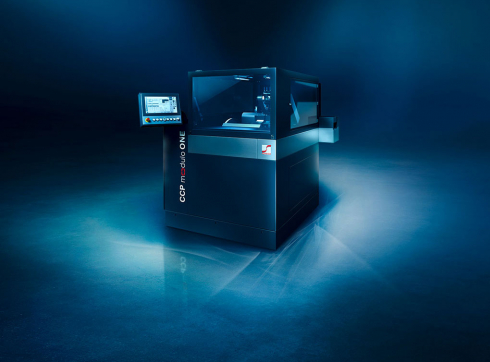
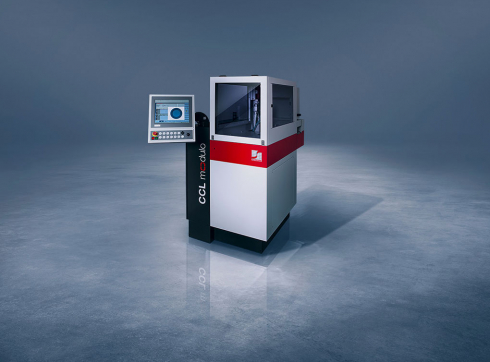
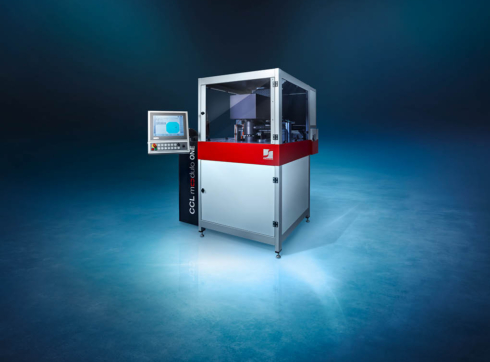
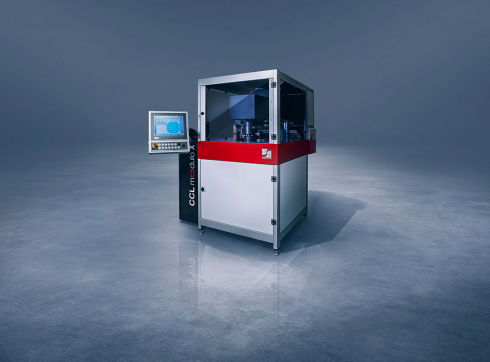
And yes, CCU Modulo ZERO integrates with existing equipment – it fits the lab you already have. Your gradual transition to alloy-free.
Stop blocking. Start linking. ZERO Excuses.
Not blockless. Deliberately.
During high-speed surfacing, lenses are exposed to substantial cutting forces, vibration, acceleration and polishing pressure. Vacuum can hold the lens – but retention alone is not enough.
What is missing is adaptable support:
_ The support required for quality
_ The flexibility required for range
_ The stability required for industrial speed
That is why ZERO deliberately retains physical support. It is not a compromise. It is engineering.
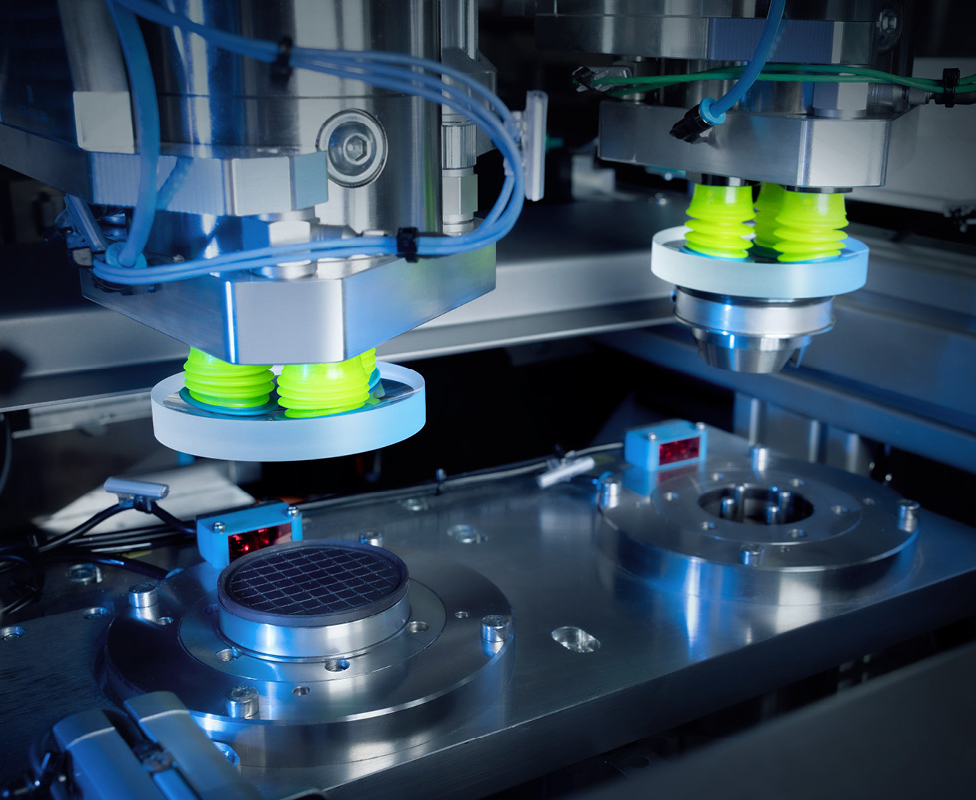
CCU Modulo ZERO combines both essentials in one: vacuum securely fixes the lens in position, while the adaptable base provides the physical support it needs throughout processing.
The process starts by positioning the lens. The smart adaptable support automatically conforms to the lens’ geometry and is locked into shape before vacuum securely fixes it in place. In less than a minute, the lens is linked and ready for surfacing.
Once established, the connection remains intact throughout generating, polishing and laser marking. No releasing. No re-fixing. No re-referencing.
The lens remains securely connected start to finish – for a clean, consistent and uninterrupted process.
At the end, the vacuum is simply released and the base returns to the cycle, ready for the next lens.
The support required for quality
The adaptable ZERO base provides support across the entire contact surface. This full support makes all the difference – especially under the high local stresses of milling and diamond turning.
Machining forces are effectively distributed, minimizing deformation and creating the stable foundation required for consistently accurate surfacing and uncompromised optical quality.
The range a lab needs – with just three bases
Modern labs need the flexibility to process the broad variety of lens geometries entering production everyday. ZERO delivers exactly that.
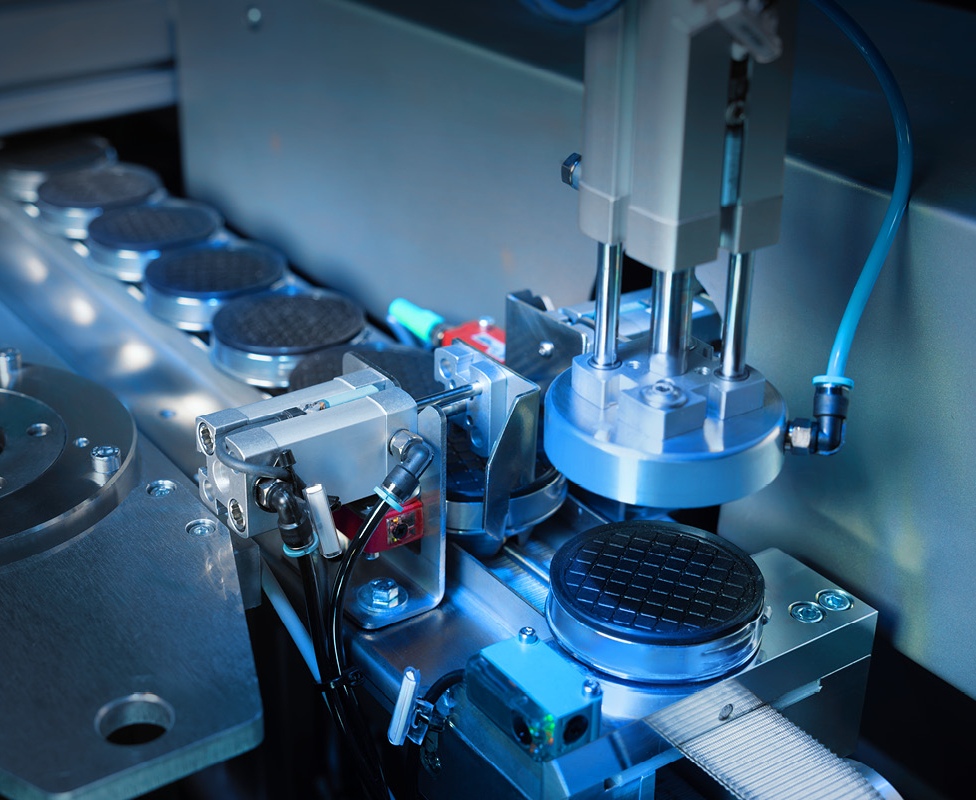
Just three standardized base variants accommodate an exceptionally broad application range.
Their innovative design conforms precisely to each lens’ individual geometry, delivering the flexibility labs are accustomed to from alloy blocking – with simple logistics and minimal base inventory.
The speed required for industrial production
ZERO eliminates the time-consuming steps in conventional blocking: no taping, no blocking medium, no thermal processes. No tape required.
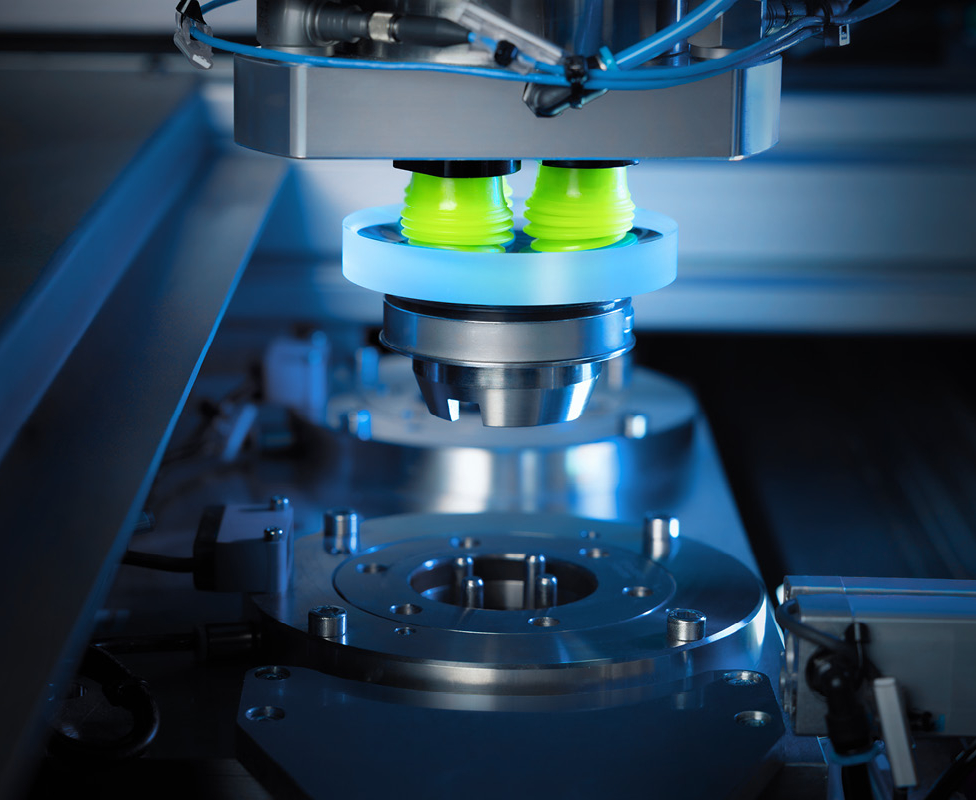
The base’s smooth membrane creates a gentle, protective interface with the lens surface that physically supports it without damaging it.
Linking itself is exceptionally fast. With no blocking medium to dispense and no heating, curing or cooling required, the lens is linked in under a minute.
And at the end, separation is instantaneuous. No time-consuming deblocking. No tape stripping.
The result is drastically reduced non-productive time, less work in process and a significantly shorter overall production flow.
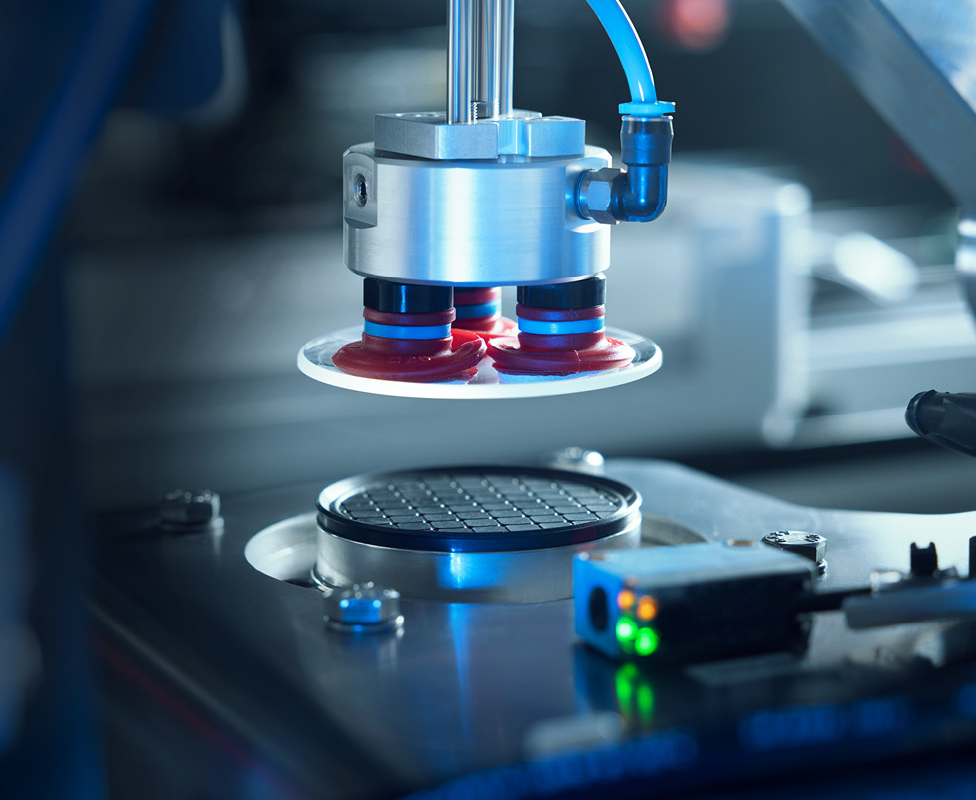
Upgrade the process. Keep the lab.
Moving to a new technology shouldn’t mean rebuilding the lab. ZERO integrates seamlessly into existing production environments, allowing labs to continue using their existing equipment, such as e.g. generators, polishers, but also automation and established production expertise.
It changes the linking process without requiring an entirely surfacing architecture or production philosophy.
Existing equipment stays productive. Existing expertise stays relevant. Existing investments stay protected.
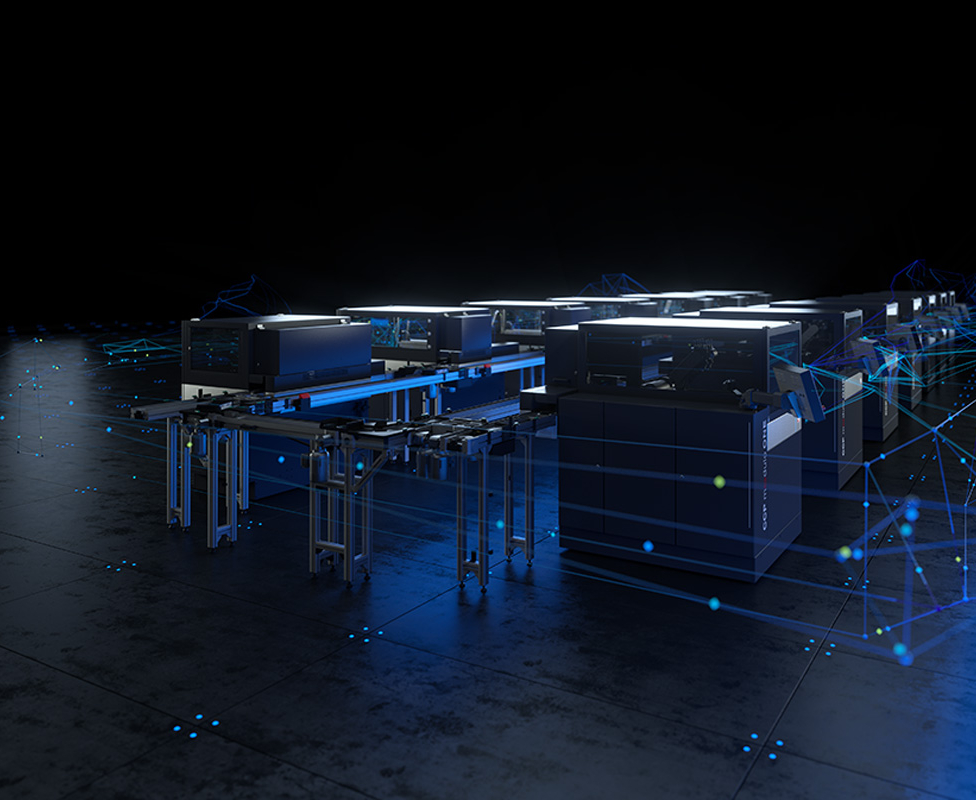
Grow into ZERO. At your own pace.
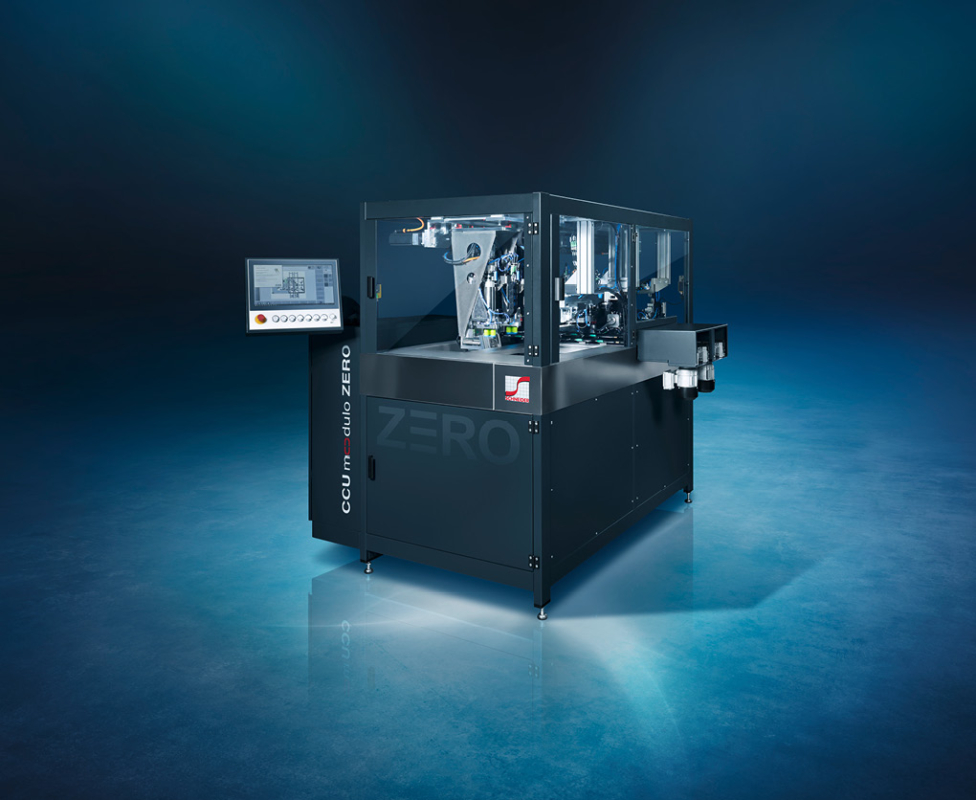
Benefits
No tape. No alloy. No cooling time.
Extremely fast linking
Ideal support throughout surfacing
Exceptionally broad application range
Reusable, adaptable support base
No consumables and waste
Easy integration into existing production
Extremely small footprint
Download
CCU Modulo ZERO
Technical Data
lens diameter
up to Ø 80 mm
clamping system
block Ø 43 mm, standard blocking dimensions
lens material
all organic and mineral lens materials
blocking material
vacuum
blocking diameter
all typic sizes
blocking height
11.5 mm
curve range
concave 0 – 8 diopters
All data subject to change without notice. Please verify details with SCHNEIDER.