Maximum productivity from every square foot
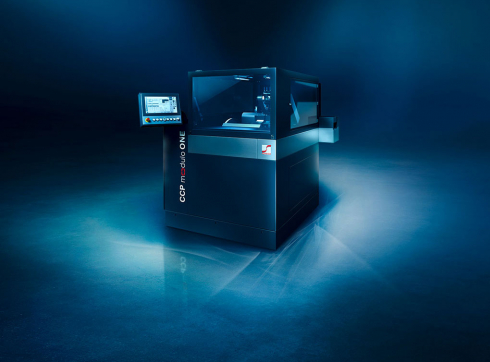
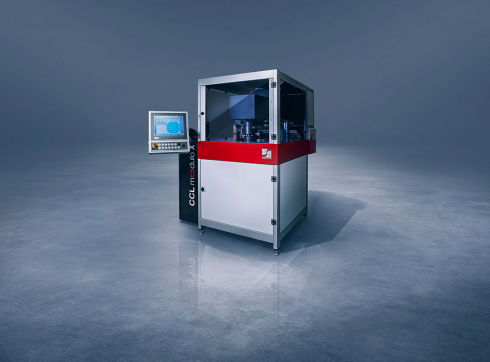
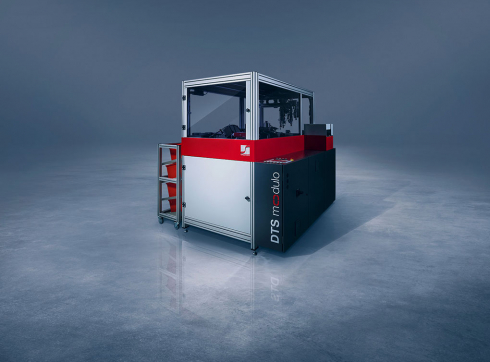
Modulo Center ONE just went Pro. We’ve taken our proven all-in-one concept – installed in labs worldwide – to the next level. With a throughput of up to 120 lenses per hour – a 40% increase in productivity – Modulo Center ONE Pro delivers exceptional production power in a remarkably compact footprint.
In just 92 sq. ft. (8.5 m²), it combines the capabilities of a full production line: a milling station, lathe turning station, two four-spindle polishing units, and your choice of laser technologies – CO₂ laser and optionally a DPSS or excimer laser.
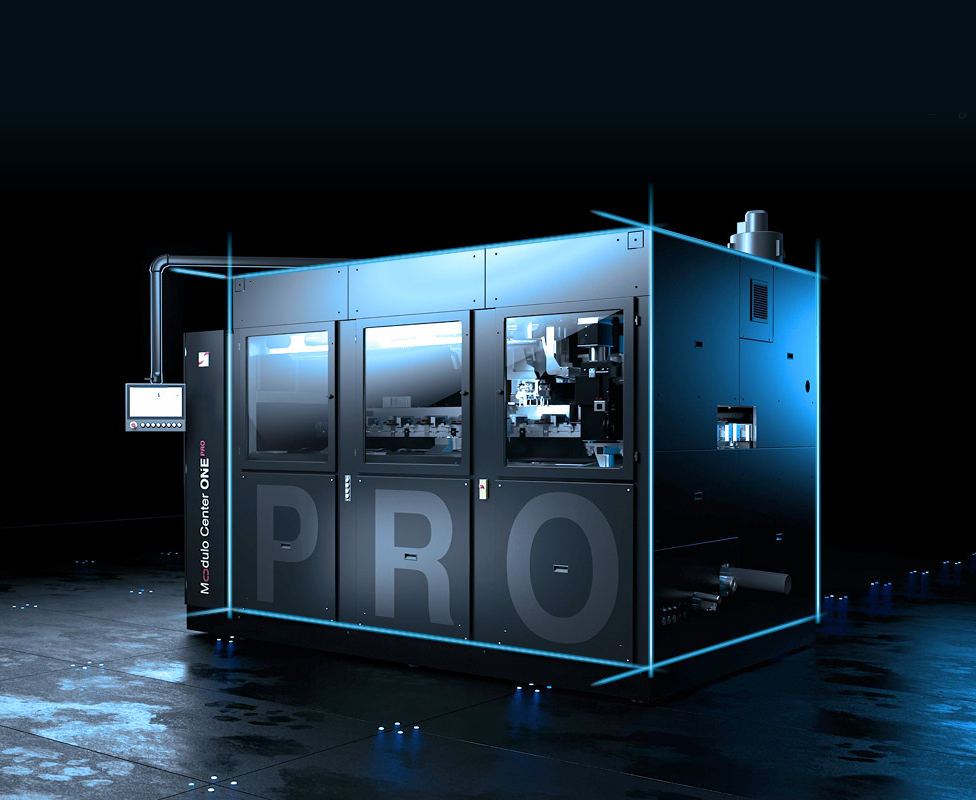
Everything is fully integrated, running simultaneously and perfectly synchronized for maximum efficiency. There is no faster way to surface a lens. And it‘s not just for labs where space is limited. For high-volume operations, the equation is equally compelling: High output. Exceptional flexibility. Low cost per lens. Maximum productivity from every square foot.
Blanks in. Surfaced lenses out. With all essential components on board and processes fully automated, little to no operator intervention is required.
Easy on space. Big on output. Serious production power.
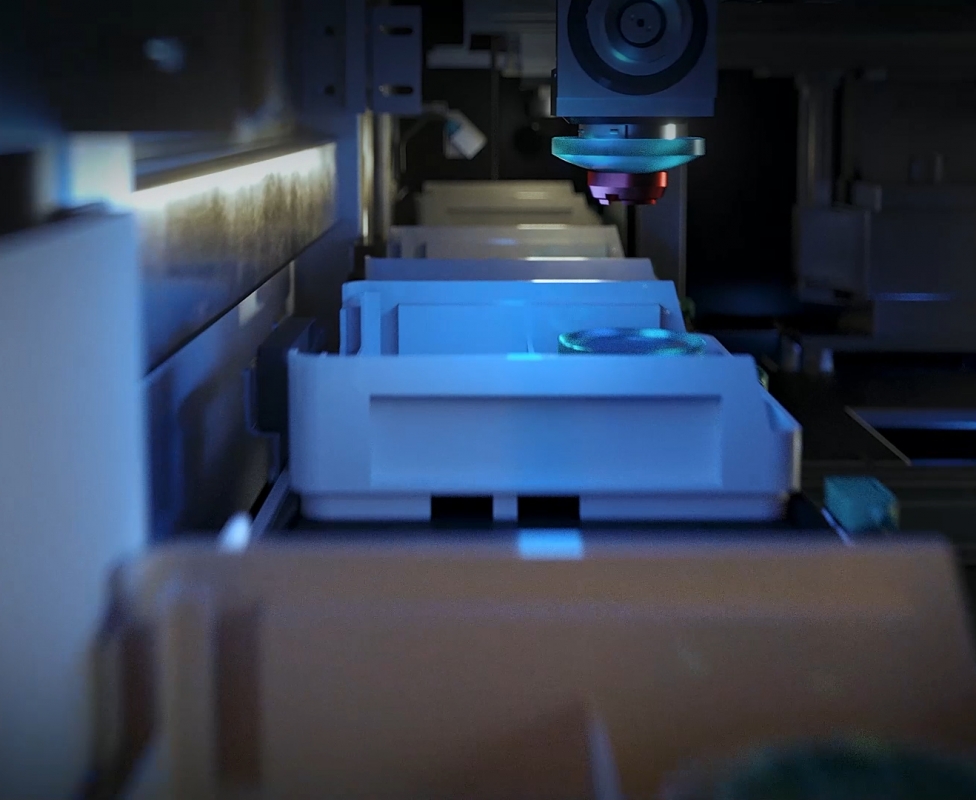
All-in-one, taken further
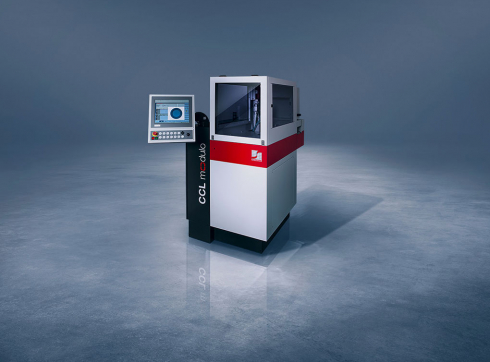
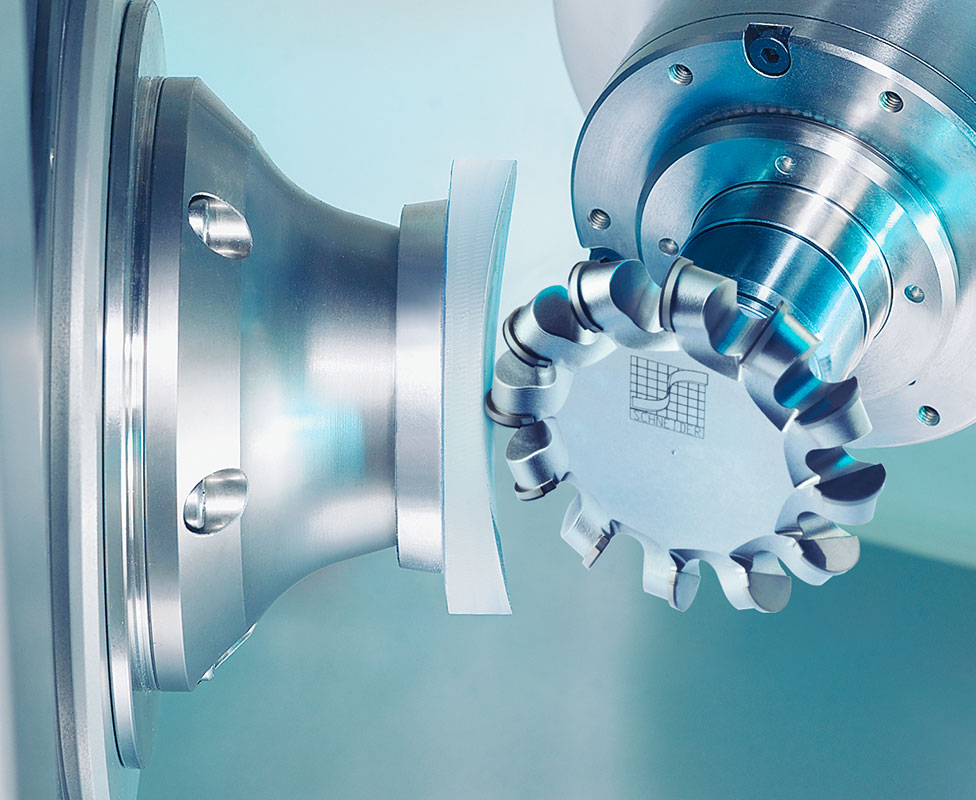
Milling and lathe turning
The two processes are fully decoupled, operating autonomously in separate, vibration-isolated stations. This allows the center to run both processes in parallel, significantly streamlining overall production time. An ultra-fast workpiece changer transfers lenses from milling to lathe turning in a very short time – minimizing chip to chip times and keeping both processes running virtually uninterrupted. The milling station combines an extra-robust, high-performance milling spindle with proven milling algorithms for powerful and fast machining, maximum process stability, and uptime. At the lathe turning station, the proven, powerful XS-Tec motor supports twin-tool operation with a dual-diamond-concept (R2 and R5) for greater flexibility and processing efficiency. The larger radius enables faster stock removal and shorter process times, while the smaller radius handles challenging geometries and steep curvatures.
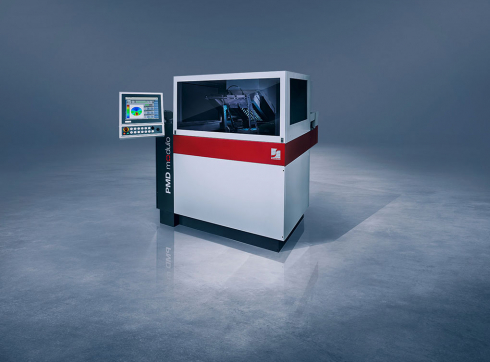
Polishing
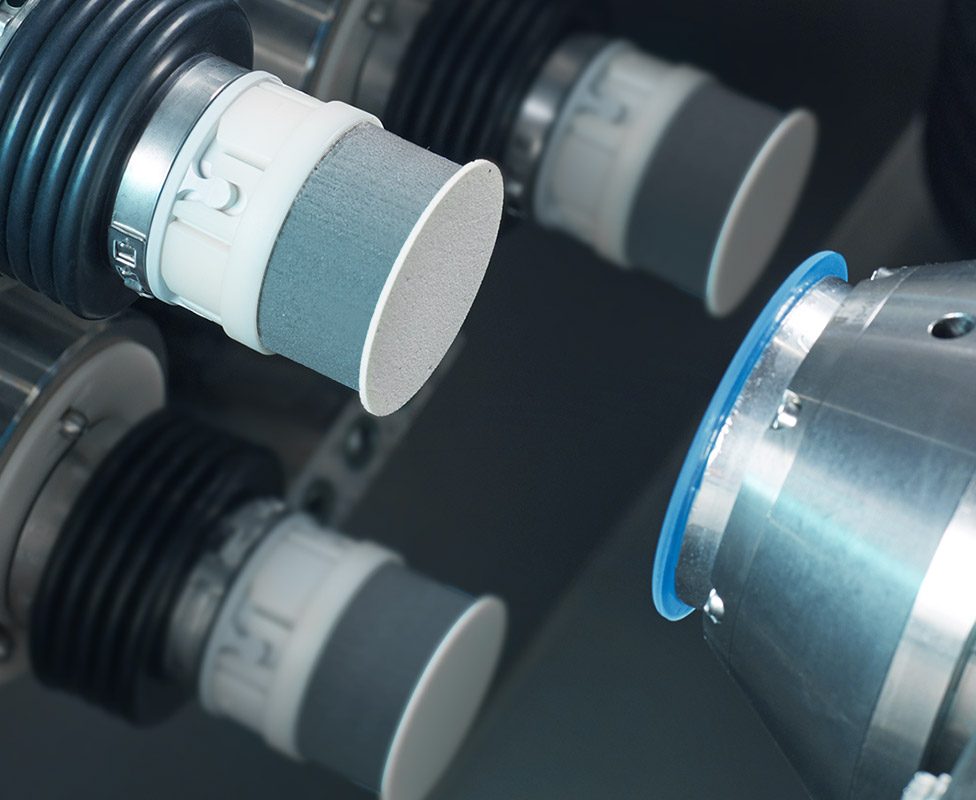
The center features two fully independent four-spindle polishing units plus a dedicated cleaning and drying station afterwards. Two separate handlings systems with four-finger grippers ensure fast transfer without contaminating the lenses. The intelligent production logic keeps time-consuming complex jobs from slowing down overall production. Smart bypassing automatically routes each lens to the next available polishing station, balancing variations in polishing time due to material or job complexity. Labs can choose between one- or two-step polishing, depending on their requirements. Just a single pad covers the full range, eliminating tool changes and saving time. Long pad lifetime ensures uninterrupted polishing throughout the shift.
Laser Marking
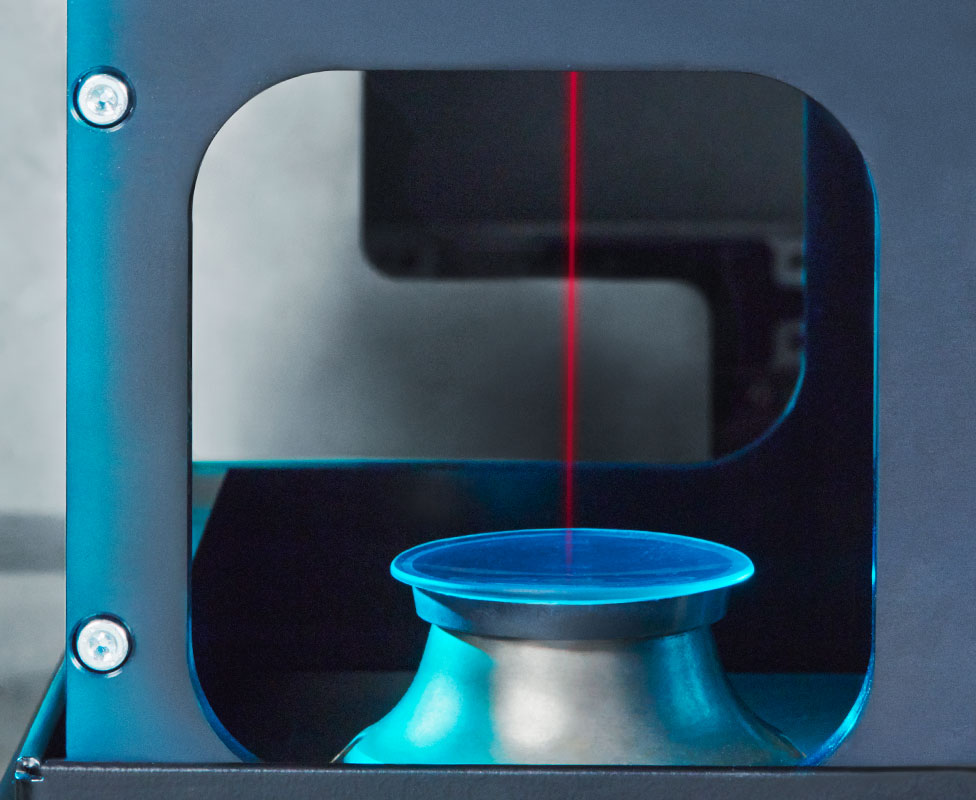
Labs can customize the laser setup to match their individual needs. They can both choose the laser technology and specify the process setup with one or two lasers. The CO₂ laser is a proven, reliable, and highly costeffective technology for marking before polishing. If markings after polishing are required, labs can select between DPSS or excimer technology. The gas-free DPSS laser is a versatile all-rounder, combining excellent marking quality with high efficiency and low running costs. For applications requiring exceptional marking A typical setup might combine a CO₂ laser for jobnumber engravings before polishing, with a DPSS or excimer laser for semi-visible and brand markings afterward.
The Modulo advantage
Modulo Center ONE Pro comes with its dedicated Control Center (MES) providing real time information about the current status, production parameters, and efficiency. It also includes tool wear statistics, errors and alarms, as well as maintenance information.

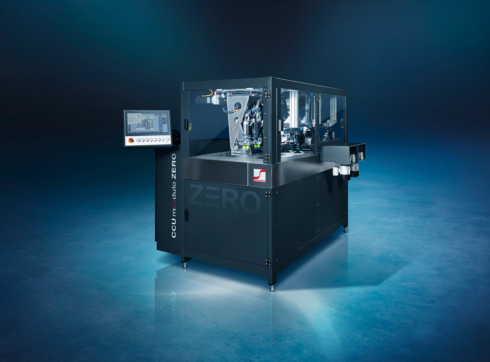
Add ZERO to create an alloy-free super cell
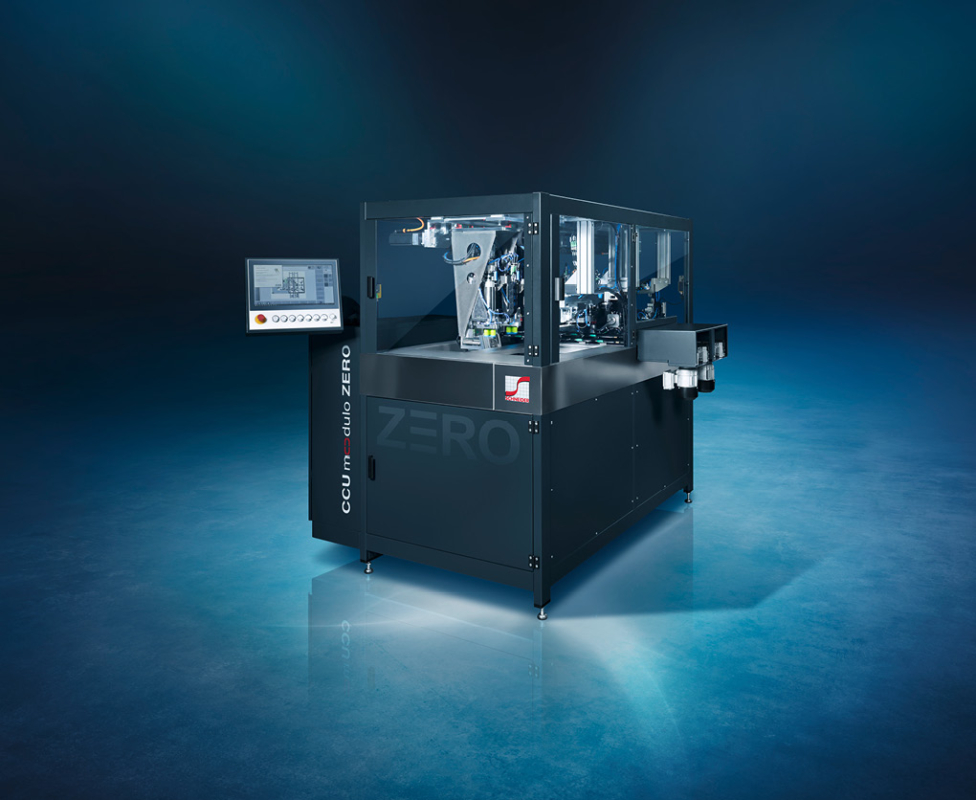
Combine Modulo Center ONE Pro with CCU Modulo ZERO, our alloy-free hybrid linking technology. Modulo ZERO offers the advantages of alloy blocking – without the alloy. It combines vacuumbased fixation with a unique support that adapts precisely to each individual lens geometry. No tape, no blocking medium, no cool-down time, no waste. Just outstanding cost-effectiveness. It cuts multiple conventional processes and workflows and become more ecological at the same time.
Benefits
Fully automated all-in-one surfacing center
All the technology to surface 120 l/h
Highest throughput per sq. ft.
Full surfacing capability for all curves and materials
Proven and reliable components
Fully automated tool and lens handling
Dedicated Control Center (MES)
CO², Excimer and DPSS laser option
Download
Modulo Center ONE pro brochure
Technical Data
lens diameter
up to ø 90 mm
clamping system
block ø 43 mm
lens material
CR39, Hi-index, Polycarbonate, Trivex®
curve range
concave 0 – 18 diopters
power consumption
5.4 kVA avg.
air requirement
6 bar (87 psi)
weight machine
approx. 6500 kg (14330 lb.)
dimensions (width x depth x height) without control panel
approx. 3560 x 2402 x 2452 mm (140 x 95 x 97 inches)
All data subject to change without notice. Please verify details with SCHNEIDER.